Growing The Outbound from Zero to Millions
Led product design through rapid growth from tens of thousands to millions of monthly visitors, building community features, learning Rails to ship code myself, and pioneering an ambassador program. Started as a small outdoor platform; grew to 700k+ users by creating a content flywheel between Instagram, trip guides, and user-generated content while maintaining authenticity.
Problems
Limited Development Resources
Small team meant design often waited weeks for engineering bandwidth. I needed to contribute beyond mockups to maintain velocity.
Acquisition Strategy
Needed sustainable growth channels beyond paid ads. Instagram was emerging as a platform for outdoor content, but we hadn't built a strategy there.
Content Quality vs. Quantity
User-generated content was inconsistent. Some trip reports were detailed and helpful; others were sparse or low-quality. How do we scale content without losing quality?
Community Engagement
Building features that kept users coming back beyond one-time trip research. Needed social elements without becoming "just another social network."
Approach
The first challenge was velocity. With a small team, design waited weeks for engineering bandwidth. I taught myself Ruby on Rails so I could implement front-end features directly — UI components, forms, page layouts, responsive updates — which fundamentally changed how fast we could move.
For acquisition, I identified Instagram as our best channel. It was emerging as the platform for outdoor photography, and we had the imagery to compete. For content, rather than building an editorial team, I designed an ambassador program recruiting passionate outdoor enthusiasts with templates and guidelines that kept quality high while scaling output. The thesis was building a flywheel: great content attracts users, users create content, content fuels social channels.
Solution
The combined efforts created a growth flywheel. Instagram drove traffic to trip guides. Trip guides prompted signups to save favorites. Users created their own trip reports, which became new Instagram content. The cycle compounded over time, with each piece reinforcing the others.
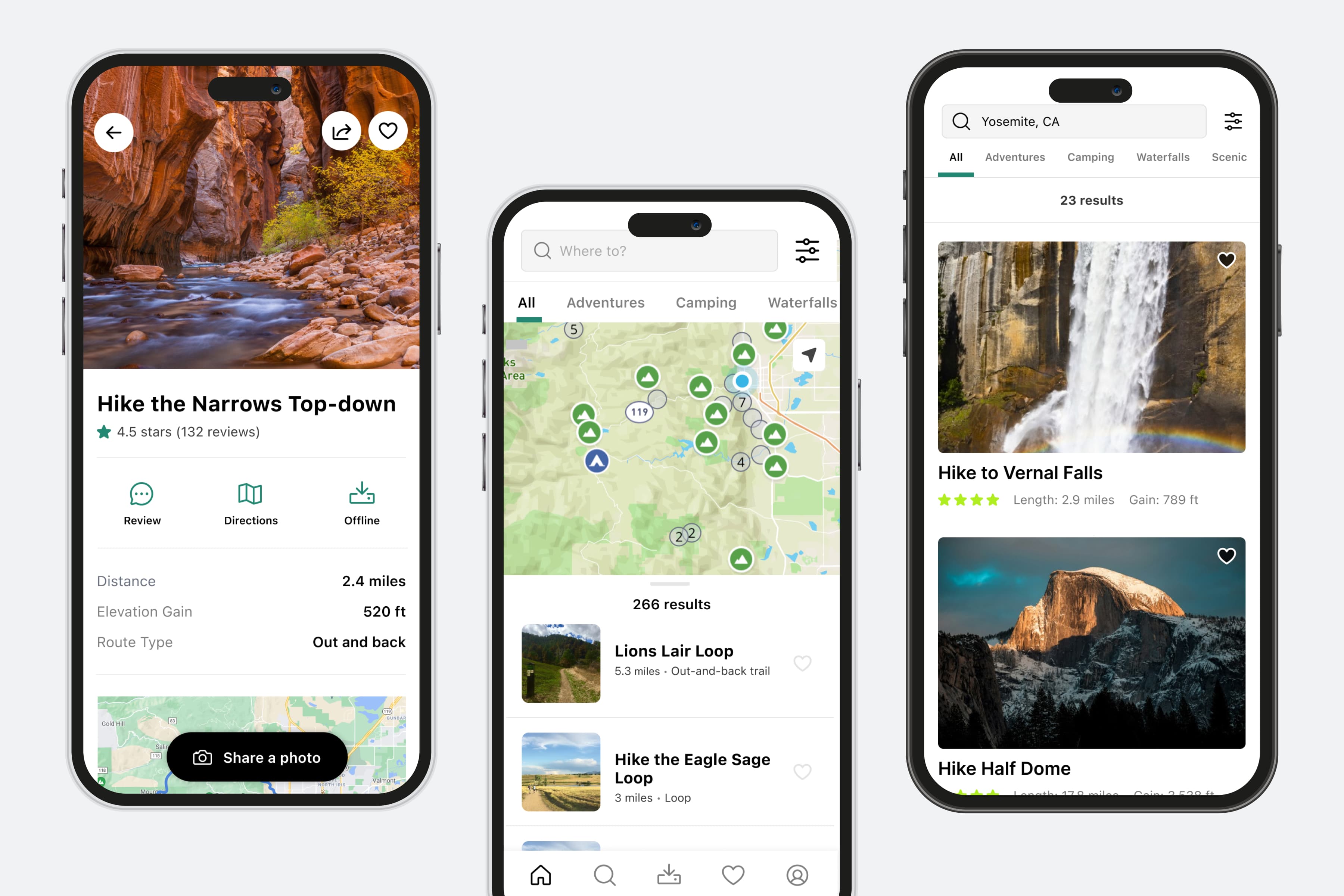
The ambassador program became a cornerstone of content strategy. Ambassadors produced hundreds of high-quality guides across diverse locations and activities, from desert backpacking to alpine climbing to coastal kayaking. I featured these prominently in search results and on the homepage to set a quality bar for other users and inspire similar contributions.
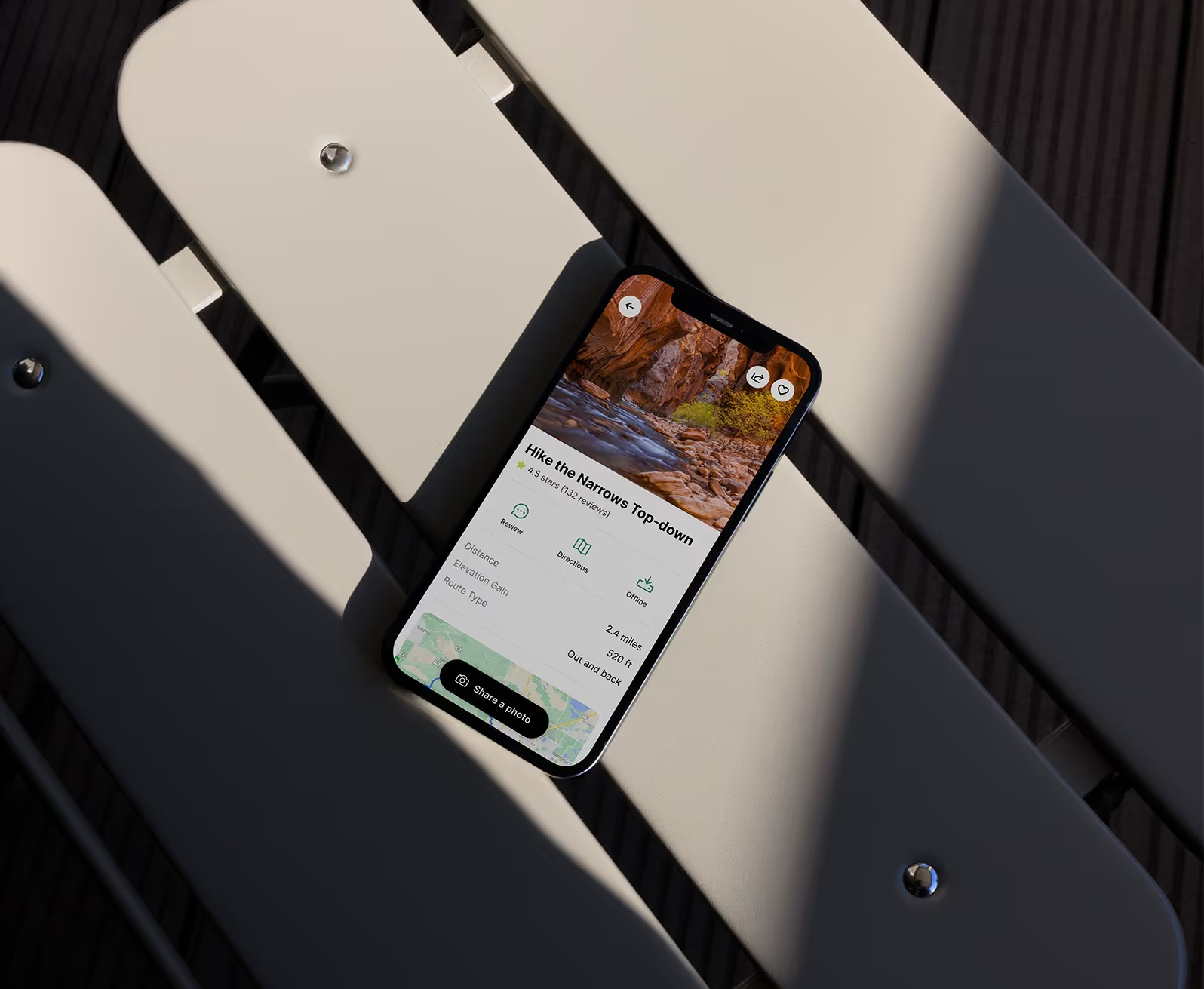
Being able to ship front-end code directly sped things up considerably. I contributed significant portions of UI implementation: profile pages, navigation updates, form improvements, responsive layouts. Instead of handing off mockups and waiting weeks, I could design something in the morning and have it live on staging by afternoon. This dramatically increased what the small team could accomplish.
Impacts
700k+ Registered Users
Grew from tens of thousands to 700k+ registered users through organic content marketing and community features that drove engagement.
iOS App Featured Twice
Mobile app featured twice in the App Store's "Apps We Love" section, driving significant downloads and brand recognition.
Development Velocity
Learning Rails allowed me to ship UI features directly, significantly increasing team output without additional engineering headcount.
Ambassador Program
Created a sustainable content pipeline with hundreds of ambassadors producing high-quality trip guides across North America.
Reflections
Learning Rails wasn't just about shipping features faster. It fundamentally changed how I approached problems. Understanding technical constraints led to better design decisions.
The ambassador program was one of my favorite initiatives. It showed that thoughtful community building can solve content problems more sustainably than purely internal production. The relationships we built with ambassadors became genuine partnerships.
If I could do it again, I'd invest more in data instrumentation earlier. We made many decisions based on qualitative feedback and intuition. Better analytics would have helped us double down on what worked faster.